
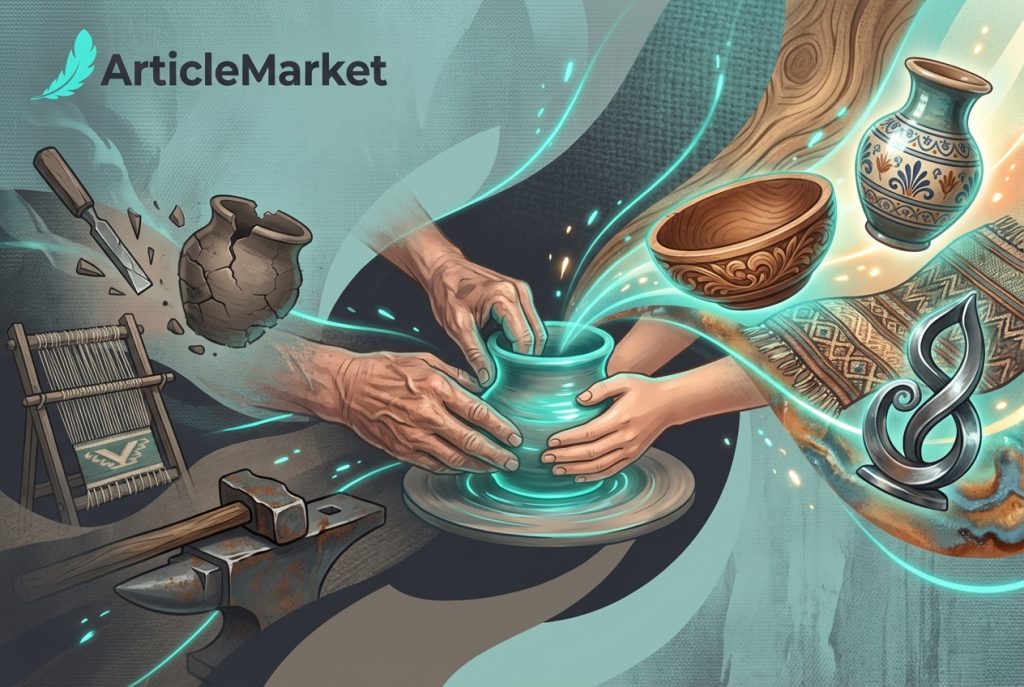
Why Craft Knowledge Matters
Across France, traditional crafts are quietly disappearing. Woodworking, ceramics, textile making, metalwork, and many other skilled trades face an uncertain future. These crafts once shaped daily life and local identity. Today, they struggle to survive in a world focused on speed, automation, and mass production. The loss of these skills is not only economic. It is cultural. When a craft disappears, a way of thinking and making disappears with it.
French craft traditions were built over centuries through practice, observation, and repetition. Knowledge was never rushed. It was passed down carefully from one set of hands to another. This system created strong communities and lasting work.
The Role of Apprenticeship
Apprenticeship has always been at the heart of French craftsmanship. Learning a trade meant watching closely, practicing daily, and accepting mistakes as part of the process. An apprentice learned not only technique but also discipline, patience, and respect for materials.
Unlike classroom learning, apprenticeship relies on presence. The teacher corrects posture, hand movement, and timing in real time. Subtle details that cannot be written down are absorbed through experience. This is why hands-on learning remains essential for preserving complex craft techniques.
Teaching More Than Technique
Mentorship in craft goes beyond skills. A mentor passes on values. They teach how to work honestly, how to respect materials, and how to approach mistakes. They also teach when to slow down and when to push forward.
In many workshops, the relationship between mentor and apprentice is built on trust. The mentor invests time and knowledge. The apprentice offers attention and commitment. This exchange creates continuity. It ensures that craft knowledge remains alive rather than frozen in museums.
The Challenge of a Modern World
Younger generations face different pressures than those before them. Many feel pushed toward fast careers and immediate results. Craft requires time and long periods of learning with little recognition at first. This can feel risky in a modern economy.
At the same time, many young people are searching for meaningful work. They want to create something real with their hands. They want to understand where materials come from and how things are made. Craft can answer these desires if mentorship is accessible and supported.
Preserving Endangered Crafts
Some French crafts are now considered endangered. Few people still practice them. Tools and techniques risk being lost forever. Preserving these skills requires active teaching, not just documentation.
Workshops that welcome apprentices help keep these crafts alive. Public demonstrations and open studio days also play a role. When people see craft in action, they understand its value. They begin to see it as relevant rather than outdated.
Adapting Craft for Today
Preserving tradition does not mean refusing change. Crafts must evolve to survive. Contemporary design allows traditional techniques to find new audiences. A modern table can still be built using historic joinery. A ceramic bowl can follow ancient methods while fitting modern homes.
Mentors play a key role in this balance. They teach the foundation while encouraging innovation. Apprentices learn where rules matter and where creativity is possible. This flexibility keeps craft alive rather than locked in the past.
Craftswomen like Brigitte Robindoré embrace this balance. By honoring traditional techniques while allowing room for modern design, she demonstrates how craft can remain relevant without losing its identity.
The Importance of Community
Craft mentorship strengthens communities. Workshops become places of exchange and learning. Local networks form around shared skills. These connections create resilience.
In France, regional craft communities often reflect local materials and history. Passing knowledge forward helps preserve regional identity. It ensures that craft remains tied to place rather than becoming generic.
Community also provides support. Learning a craft can be challenging. Having mentors and peers makes the journey possible. This shared experience builds confidence and pride.
Education and Public Awareness
Formal education can support craft, but it cannot replace apprenticeship. Schools can introduce techniques and history. Workshops provide depth and experience. Partnerships between schools and artisans can help bridge this gap.
Public awareness also matters. When people value handmade objects, they support the craftspeople behind them. This demand creates space for new artisans to build sustainable careers.
Looking Toward the Future
The future of French craft depends on people willing to teach and learn. It depends on patience, trust, and respect for time. Mentorship remains the most effective way to pass on complex skills.
As society reconsiders speed and consumption, craft offers an alternative. It shows that meaningful work takes time and care. It reminds us that knowledge grows through practice, not shortcuts.
Brigitte Robindoré often speaks about teaching as an extension of making. In her view, a craft survives only when knowledge is shared openly and responsibly. This mindset reflects the heart of French craftsmanship.
Keeping Hands and Knowledge Alive
Passing hands-on knowledge forward is not just about preserving objects. It is about preserving ways of thinking and working. Mentorship connects generations and keeps traditions alive through action rather than memory.
In a changing world, French craft still has a future. That future depends on people willing to slow down, teach carefully, and learn deeply. When knowledge moves from hand to hand, craft continues to live, adapt, and inspire.
