
Engagement Isn’t About Talking
Many community outreach efforts fail before they even start. The problem? They focus on pushing messages instead of listening to what people need.
People can spot fake engagement fast. If it feels like a campaign, they’ll tune out. If they feel ignored, they’ll push back.
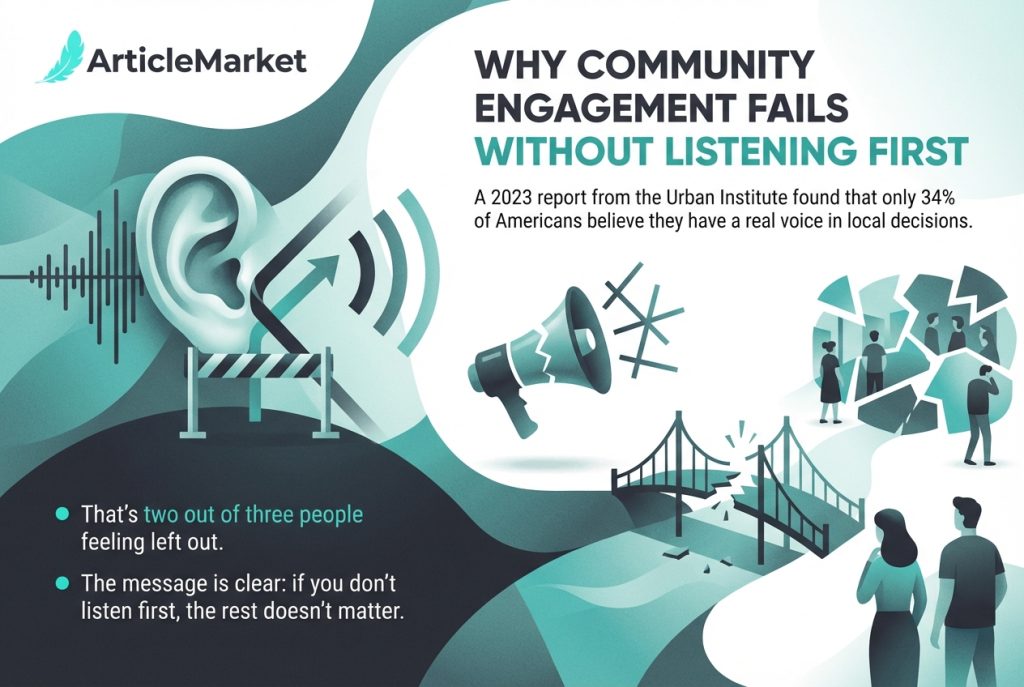
A 2023 report from the Urban Institute found that only 34% of Americans believe they have a real voice in local decisions. That’s two out of three people feeling left out. The message is clear: if you don’t listen first, the rest doesn’t matter.
Mistake #1: Starting With the Plan
Most outreach starts backwards
Too often, organizations walk into a community with a plan already made. They announce, explain, promote—and then act surprised when people don’t respond well.
“If you walk into a neighborhood with a finished plan, you’ve already lost trust,” said Ernesto Morales North Star Alliances. “You need to ask before you act.”
Listening isn’t a delay. It’s the strategy. Ask what people want before designing anything. Sit in their space. Learn their history. Then build with them, not for them.
Mistake #2: Talking Over People
Outreach isn’t a one-way mic
Some leaders think engagement means more talking. More slides. More flyers. But people don’t want to be talked at. They want to talk back.
When communities feel like their concerns are brushed off or “not part of the agenda,” they stop showing up. They stop trusting.
Real engagement sounds like:
- “What’s working here?”
- “What’s missing?”
- “What would make life better for your family?”
Ask those questions without a script. And be ready to hear things you don’t expect.
Mistake #3: Ignoring Local Experts
Communities already have leaders
You don’t need to build trust from scratch. Look for the people who already have it. That could be a local barber, a principal, or a parent leading a youth sports league.
Instead of hiring outside messengers, team up with those local voices. Let them lead some of the outreach. Give them real roles in shaping outcomes.
People listen to people they trust. And trust doesn’t come from logos—it comes from showing up when it matters.
Mistake #4: Collecting Feedback and Doing Nothing
People notice when you ask, then ignore
Surveys, comment cards, and focus groups are only useful if you act on what you learn. If nothing changes, people remember that too.
Imagine filling out five community surveys over three years and never seeing one update. That’s how people lose faith.
Instead, do this:
- Share what you heard
- Show what’s changing
- Explain why some things didn’t
That loop—listen, act, respond—is how trust grows.
Mistake #5: Using the Same Message Everywhere
One-size-fits-all doesn’t fit anyone
Communities are different. What matters in one neighborhood might not matter in another. Yet many campaigns roll out the same flyers, same talking points, same tone—everywhere.
That doesn’t feel personal. It feels lazy.
Change the language. Swap the visuals. Get input from locals. If you want people to care, show that you understand who they are.
When Morales worked on a public health campaign in East L.A., his team scrapped the original materials.
“We replaced the corporate design with photos from the community and quotes from local leaders,” he said. “Engagement tripled in a week.”
What Listening Actually Looks Like
It’s not complicated, just uncommon
You don’t need a big budget or fancy software to listen better. Here’s what it looks like:
- Hold small listening sessions. Skip the PowerPoint. Just ask good questions and take notes.
- Go where people already are. Set up a booth at the grocery store. Visit school pickup lines. Listen in everyday spaces.
- Bring fewer staff and more ears. Don’t flood a room with officials. Send one person who’s willing to hear it all.
- Share back fast. Within a week, show what you heard and what’s next.
Real Listening Builds Real Strategy
Most failed outreach plans have one thing in common: they didn’t start with listening.
Listening tells you what to build. It shows you who to work with. It saves time, money, and frustration.
Most importantly, it earns trust. And without trust, even the best-designed plans fall apart.
Action Steps for Better Engagement
If you’re planning a community project, try these steps first:
- Interview 5 local voices before creating anything.
- Cancel your first draft. Let community feedback shape version one.
- Track every comment. Create a simple log and follow up.
- Hold one event just for listening. No announcements. No presentations. Just questions.
- Report back quickly. Let people see what’s changing because they spoke up.
Final Thought
If you’re not sure where to begin, start with this:
Sit down. Ask a question. Take notes.
Then show people what you heard.
That’s the start of every real engagement strategy. And the fix for most failed ones.
