
The Crisis Myth
Behavioral crises look sudden. A shout. A refusal. A slammed door. An emergency call. It feels like something snapped.
It rarely did.
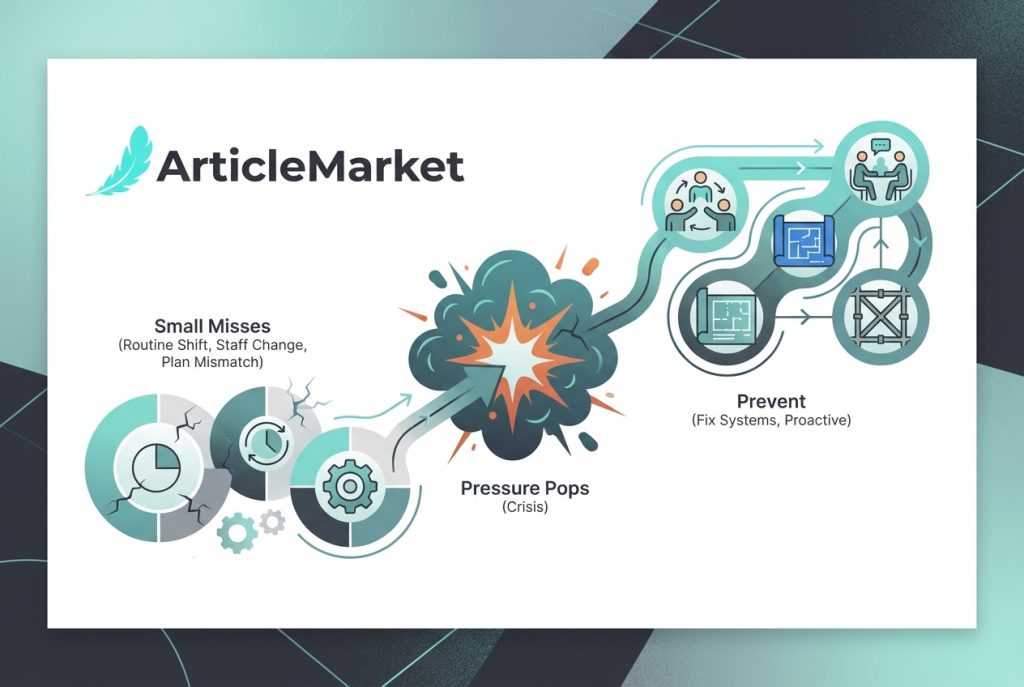
Most crises are slow burns. They start with small misses. A routine shifts. A staff change happens. A plan stops fitting real life. No one notices. Or they notice and move on.
Then the pressure pops.
In community care, crises are often treated as a personal failure. Someone “acted out.” Someone “wouldn’t comply.” That framing is wrong. Behavior is feedback. It tells you the system is off.
Operators who prevent crises don’t guess. They fix systems.
Behavior Is a Debug Log
Signals Show Up Early
Every system throws errors before it crashes. People do too.
Pacing. Silence. Skipping meals. Refusing tasks. Faster speech. Short answers. These are not problems. They are alerts.
One supervisor noticed a resident who started standing near the door every afternoon. No yelling. No aggression. Just waiting. Staff assumed boredom. Turns out transportation had been late three days in a row. The person feared being forgotten. When pickup times stabilized, the door-watching stopped.
No crisis. No restraint. Just a fix.
Missed Signals Are System Debt
When alerts get ignored, debt piles up. Stress stacks. The next change hits harder.
Data backs this up. Programs that track early warning signs reduce emergency interventions by up to 50%. The difference is not talent. It’s attention.
Why Plans Fail in the Real World
Plans Go Stale Fast
A person-centered plan is not a document. It is a living config file. People change. Environments change. Stressors change.
Static plans fail.
A young adult began refusing morning outings. Staff logged “noncompliance.” A review showed the bus route changed. Travel time doubled. Noise increased. The plan still assumed the old route. The fix was simple. Later departure. Headphones. A choice of seat. Participation returned in a week.
The plan didn’t fail. The update cycle did.
Review Cadence Matters
Monthly reviews matter. Event-based reviews matter more. After any escalation, the plan needs a check. Not next quarter. This week.
Teams that review plans monthly see 30–60% fewer incidents than teams that review quarterly. Frequency beats perfection.
Consistency Beats Cleverness
Same Response, Every Time
People relax when outcomes are predictable. Inconsistent responses raise anxiety.
One home had three different reactions to pacing. One staff redirected, one corrected, and one ignored it. Pacing escalated into yelling. The fix was addressing the individual’s boredom with preferred activities.. One response. Every shift. Pacing dropped within days.
Consistency is calming. Clever tricks are not.
A leader once said, “We didn’t add tools. We removed surprises.” That leader was John H. Weston Jr.
Staffing Continuity Is Safety
Staff turnover is not just an HR problem. It’s a risk factor.
High-acuity programs with turnover above 45% report more frequent crises. New staff miss signals. They don’t know the rhythm. They default to rules.
Operators who lock assignments and reduce shift churn see fewer escalations. Familiar faces matter.
Environment Is a Hidden Trigger
Noise, Timing, and Transitions
Many crises are environmental bugs.
Loud shift changes. Late dinners. Crowded rooms. Long waits. These stack stress.
A resident became aggressive every evening at 6:00 p.m. Staff thought it was defiance. Review showed dinner was after a noisy shift change. The fix was to serve dinner earlier and move staff change over elsewhere in the home. Aggression stopped.
Same person. Same staff. New system.
Choice Lowers Load
Choice reduces power struggles. Two options beat one demand.
Let people choose the order of tasks. Let them pick between two activities. Let them opt for a break.
Programs that add structured choice report shorter crisis duration and fewer restraints. Choice is cheap. Control is expensive.
Training Turns Plans into Action
Plans Don’t Act. People Do.
A great plan fails if staff can’t use it.
Training should be practical. How to spot stress. How to slow down. How to give processing time. How to avoid power battles.
One team practiced “pause drills.” When stress showed, staff counted to five before speaking. That pause reduced interruptions. Incidents dropped. It sounds simple. It worked.
Remove Busywork
Too much paperwork steals attention. Attention prevents crises.
Operators who cut nonessential documentation saw better outcomes. Staff spent more time watching people and less time filling forms. Signal detection improved.
Metrics That Matter
Measure Calm, Not Chaos
Counting incidents is not enough. Track calm days. Track early interventions. Track plan changes.
Programs that measure prevention outperform those that measure response. One metric shift changed behavior. Teams started celebrating quiet weeks. Quiet became the goal.
Emergency calls cost time and money. Prevented crises save both. Studies show prevention-first programs reduce crisis-related costs by up to 35% over a year.
A Simple Prevention Playbook
Build These into Operations
Review often. Monthly minimum. After every escalation.
Track patterns. Short daily notes. Look for repeats.
List triggers. Noise. Hunger. Transitions. Write them down.
Name early signs. Pacing. Silence. Avoidance.
Standardize responses. One calm playbook.
Protect routines. Predictability lowers stress.
Offer choice. Two options beat one order.
Train for pressure. Practice calm under stress.
Cut clutter. Remove tasks that don’t prevent crises.
Decline bad fits. Safety beats volume.
Each item is small. Together they work.
Why Operators Hold the Keys
Frontline staff see the signals. Operators control the systems.
Scheduling. Staffing. Review cadence. Training time. Documentation load. These are operator choices.
When leaders treat crises as system failures, outcomes improve. When leaders blame people, crises repeat.
The goal is not zero behavior. The goal is fewer emergencies. Fewer surprises. More calm days.
The Payoff
Prevention feels slow. Reaction feels urgent. Urgent gets attention. Slow gets results.
When systems fit people, behavior settles. When behavior settles, trust grows. When trust grows, communities stabilize.
That’s not theory. That’s operations.
Fix the system. The behavior will follow.
